Nicaragua officially began the consultation process on the initiative for a partial reform of the Political Constitution, a stage aimed at strengthening exchanges with various national and international actors before its final debate in the National Assembly.
According to Co-President Rosario Murillo, this period of dialogue will last one month and will involve strategic institutions such as the Office of the Attorney General of the Republic, the Nicaraguan Army and the National Police.
«This is an initiative for our homeland and for freedom, dignity, and sovereignty—a homeland committed to the common good, to the well-being of its people, to the continued implementation of programs to combat poverty, and to preserving peace and prosperity,» the Nicaraguan Co-President said.
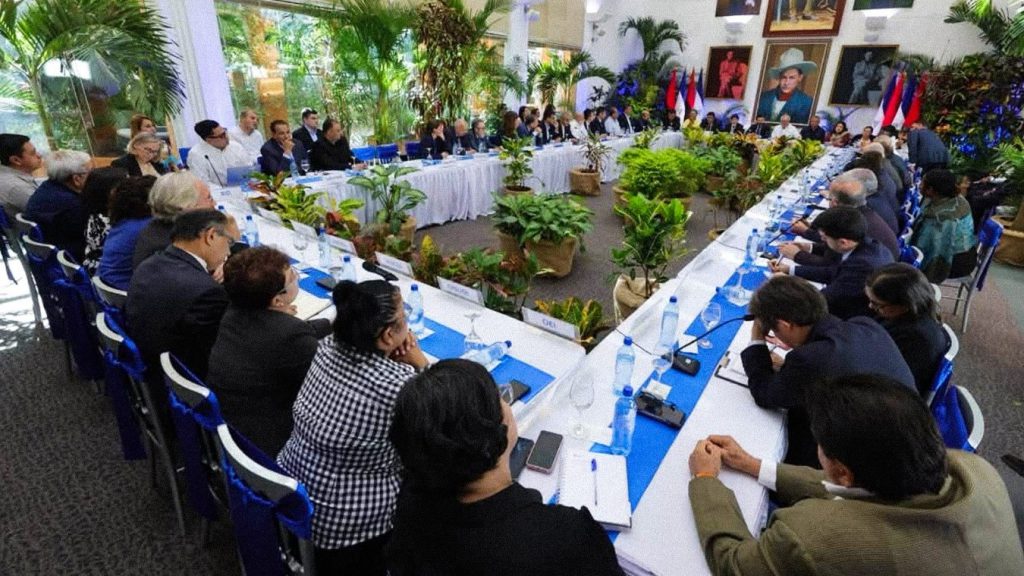
The opening of this consultation cycle was marked by a meeting between Government representatives and members of the diplomatic corps and international missions accredited in the country, who were briefed on the main scope of the constitutional proposal.
The meeting was held at the headquarters of the Ministry of Foreign Affairs and was led by Co-Foreign Ministers Denis Moncada Colindres and Valdrack Jaentschke, together with Minister Iván Lara and Presidential Adviser for the Promotion of Investment, Trade and International Cooperation Laureano Ortega Murillo.
Representatives of the financial, business and productive sectors, religious organizations, municipal governments, State and health system workers, as well as entrepreneurs, journalists, young people, authorities from the Caribbean Coast, and Indigenous and Afro-descendant peoples will also participate, with the aim of gathering contributions from different sectors of the country.
Constitutional reform moves forward with the aim of strengthening sovereignty and peace
For his part, National Assembly President Gustavo Porras reaffirmed that those who have acted against the country’s constitutional order and peace cannot exercise political rights.
“And for this, we must carry out constitutional reforms that, as our democracy tells us—the Nicaraguan democracy, the democracy of the Nicaraguan people, the democracy of the People as President—entail an electoral organization that responds to the interests of the people and guarantees that elections will belong to the Nicaraguan people and serve the Nicaraguan people, just as we have continued to reaffirm.”
Once the consultation phase has concluded, the special commission will prepare the report to be presented before the plenary session of Parliament.
According to the official schedule, approval of the constitutional reform is expected during the first days of September, coinciding with historic dates such as the signing of the Act of Independence of Central America and the commemoration of the Battle of San Jacinto, symbols of the sovereignty and defense of the Nicaraguan nation.