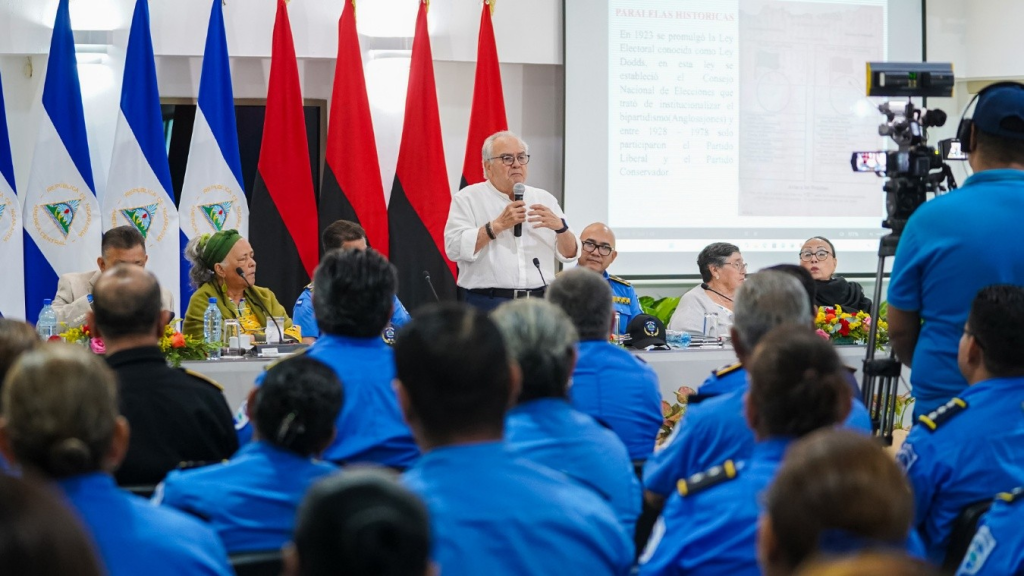
Nicaragua’s National Assembly presented the proposed constitutional reform to the National Police. The proposal establishes seven-year terms for the Chief of Police and the country’s principal State authorities.
«It is a great honor for the National Police to take part in this process, reaffirming our commitment to fulfilling the constitutional mission entrusted to us by the people and the law,» said National Police First Commissioner General Francisco Díaz.
Extending constitutional terms to seven years is intended to support medium- and long-term development initiatives, provide greater stability for the State, and strengthen the conditions needed to advance the fight against poverty, explained Gustavo Porras, President of Nicaragua’s National Assembly.
Porras stated that the reform responds to the objective of consolidating a constitutional framework that preserves peace, security and stability as pillars of national development.
He also specified that the terms of the authorities currently in office will be extended to seven years in order to harmonize them with the new constitutional framework.
The proposal incorporates reforms related to strengthening the People as President model, as well as new powers for the Supreme Electoral Council to verify and sanction conduct that violates constitutional principles.
It also includes provisions to prevent foreign financing of political organizations that act against national sovereignty, independence and self-determination, Porras explained.
The consultation was chaired by National Assembly President Gustavo Porras, together with First Commissioner General Francisco Díaz, Director of the National Police; Commissioner General Victoriano Ruiz; and Commissioner General Fernando Javier Ocón.
This was the third consultation session on the partial reform of the Constitution, a process that will continue with the country’s different political, social, economic and institutional sectors before the proposal is debated in Parliament.